雙語學習
-
Read More
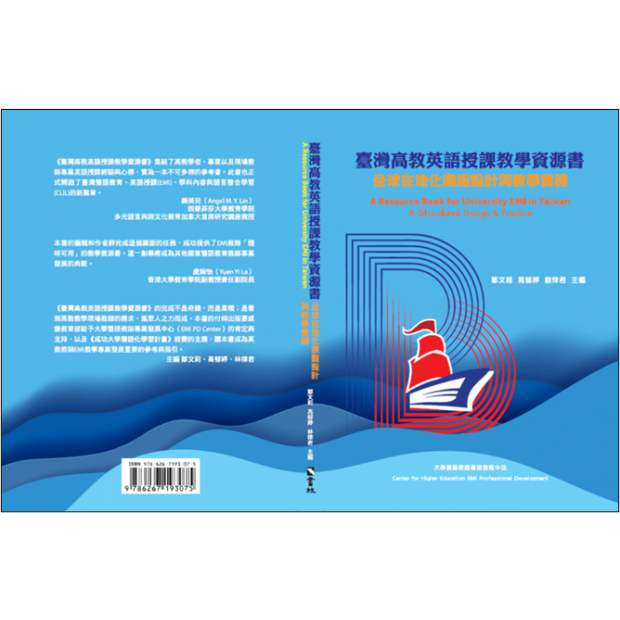
 臺灣高教英語授課教學資源書-- 全球在地化課程設計與教學實踐 A Resource Book for University EMI in Taiwan: A Glocalized Design & Practice
臺灣高教英語授課教學資源書-- 全球在地化課程設計與教學實踐 A Resource Book for University EMI in Taiwan: A Glocalized Design & Practice
臺灣高教英語授課教學資源書-- 全球在地化課程設計與教學實踐
A Resource Book for University EMI in Taiwan: A Glocalized Design & Practice -
Read More
 國際高教培訓暨認證中心 Higher Education Accreditation for Teaching
國際高教培訓暨認證中心 Higher Education Accreditation for Teaching
參訪國際高教培訓暨認證中心 Higher Education Accreditation for Teaching -
Read More
 語言學習與寫作中心相關工作坊與英語諮詢 Workshops and English Consultation
語言學習與寫作中心相關工作坊與英語諮詢 Workshops and English Consultation
參訪語言學習與寫作中心
Language Learning and Writing Center -
Read More
 國家發展委員會雙語資料庫學習資源網 NDC Bilingual Learning Resource Website
國家發展委員會雙語資料庫學習資源網 NDC Bilingual Learning Resource Website
參訪國家發展委員會雙語資料庫學習資源網
NDC Bilingual Learning Resource Website -
Read More
 香港教育大學 The Education University of Hong Kong
香港教育大學 The Education University of Hong Kong
參訪香港教育大學
The Education University of Hong Kong -
Read More
 雙語化學習計畫經費支給規定 Regulations for the Funding of the Bilingual Learning Program
雙語化學習計畫經費支給規定 Regulations for the Funding of the Bilingual Learning Program
國立陽明交通大學學生雙語化學習計畫之重點培育學院經費支給規定
111.11.16 1110047336 字號簽案核可
一、為有效執行教育部大專校院學生雙語化學習計畫之重點培育學院,在此計畫之整體目標及階段 性績效指標架構下,依據大專校院推動雙語化計畫補助暨經費使用原則,訂定本校「學生雙語 化學習計畫之重點培育學院經費支給規定」(以下簡稱本規定)。
二、經費來源:教育部補助本校學生雙語化學習計畫之重點培育學院經費支應
三、重點培育學院各系所教師應就其個人開授課程內容、特色及未來發展,以英語教學方式授課,其方式包括教材採用英語書籍,授課、研討及成績評量皆採用英語方式為之。
四、為提升學校整體雙語化學習環境,強化全英語授課之雙語專業人才培育,以及學生英語能力, 經費使用範圍如下:
1、 學校編制外,聘任國內外學者、專家、技術人員或博士後研究人員擔任教學人員及編制外 計畫管理人才之薪資。
2、 編制內教師(包括研究人員及專業技術人員)除本俸、學術加給及主管職務加給以外之經 費(含彈性薪資及開設全英語課程獎勵金)。
(1) 開設全英語課程依必選修課程及修課人數以點數計算獎勵金。必修課每學分 1 點,選修 課依選修學生人數分級:20 人(含)以上每學分 1 點;1-19 人每學分 0.5 點。若多位教師 共同擔任同一課程教學時,則由系所依據教師的授課時間分配比例,將課程學分數配給 教師。每點獎勵金以 1 萬元為原則,然實際金額視當年度核定之計畫經費與使用情況與 使用情況調整。語言訓練課程、書報討論、論文研討、專題、演講等性質之相關課 程不得支領獎勵金。
(2) 錄製雙語教學相關之線上影片課程,以便放置連結於各系網站或雙語辦公室網站,供學 生線上學習使用。影片長度每兩小時 1 點,每點獎勵金以 1 萬元為原則,然實際金額視 當年度核定之計畫經費與使用情況與使用情況調整。
(3) 為鼓勵英語教學,增設英語教學獎,院評審委員由系推薦之英語教學教師名單中,視情 形選出若干名「院英語教學獎」得主,由學院頒發獎狀及每人獎金新台幣壹萬元整。
3、 辧理雙語教學相關之講座、工作坊、研習會、座談會、訓練進修和學生英語能力競賽等活 動之費用。
4、 辧理雙語教學相關之講座、工作坊、研習會、座談會、訓練進修和學生英語能力競賽時, 得聘請校內外專家學者之講座鐘點費,及校外專家學者出席費、審查費等相關費用。
5、 聘任編制外專案工作人員之薪資,包括教學指導員(mentor)、教學助理(TA)人才或相關 行政人員、助理等薪資、鐘點費、津貼或工讀金等費用。臨時工資和工讀金依照本校支給 規定辦理。
6、 教師參與本校國際高教培訓暨認證中心 (Higher Education Accreditation for Teaching, HEAT) 培訓並獲得國際高等教育專業認證 (HEA Fellowship) 之培訓費用。
7、 學生學習、輔導、國際交流及提升學生學習成效等相關費用。
8、 獎勵本校非英語系國家之學生參與英語能力檢測,以提升英語能力,獎勵檢測之成績標 準、獎勵金額上限及獎勵辦法如下:
(1) 「財團法人語言訓練測驗中心」舉辦之全民英語能力分級檢定測驗 GEPT:通過中高級 初複試(含聽說讀寫四項),獎勵 3000 元;通過高級初複試(含聽說讀寫四項),獎勵 5000 元。
(2) 托福測驗 (TOEFL):iBT (Internet-Based T ):79 分 (含) 以上者,獎勵 3000 元 ; 92 分 (含) 以上者,獎勵 5000 元。
(3) 雅思 (IELTS):聽說讀寫皆達 6.0 (含) 以上者,獎勵 3000 元 ; 聽說讀寫皆達 6.5 (含) 以上者,獎勵 5000 元。
(4) 多益(TOEIC): 聽力及閱讀成績總和達 785 分(含) 以上且口說及寫作成績總和 310 分 (含)以上者,獎勵 3000 元;聽力及閱讀成績總和達 945 分(含) 以上且口說及寫作成績 總和 360 分(含)以上者,獎勵 5000 元。
(5) 英國劍橋大學國際英文認證(Test of Cambridge Certificate):聽說讀寫四項成績 皆達 CEFR B2 等級(含)以上者,獎勵 3000 元;聽說讀寫四項成績皆達 CEFR C1 等級(含) 以上者,獎勵 5000 元。
(6) 英國劍橋大學領思英語檢測(Linguaskill):聽說讀寫四項成績皆達 CEFR B2 等級 (含)以上者,獎勵 3000 元;聽說讀寫四項成績皆達 CEFR C1 等級(含)以上者,獎勵 5000 元。
(7) 自 110 學年度起參加英語能力檢測達標準,每人獎勵以一次為限,凡接受過任一獎勵 者,不得再提出申請。
9、 學生英語能力競賽活動辦理及獎金等相關費用。
(1) 學生英語能力競賽由校內外委員評選出冠、亞、季軍各一名(隊),以及佳作三名 (隊)。
(2) 競賽為個人競賽時,學生英語能力競賽獎金上限:冠軍一名 2 萬元;亞軍一名 1 萬元; 季軍一名 5000 元;佳作每名 2500 元。
(3) 競賽為團體競賽時,學生英語能力競賽獎金上限:冠軍一隊 4 萬元;亞軍一隊 2 萬元; 季軍一隊 1 萬元;佳作每隊 5000 元。
(4) 以上獎項與獎金,得按舉辦活動需求,分組頒發,例如:研究所/大學部組,冠、亞、 季、佳作;不同領域組別(醫學組/工程組/人社組/...),冠、亞、季、佳作。
10、全英語教學環境之直接相關軟硬體建置。
11、辦理國內外雙語教學及學術交流活動。
12、區域資源共享與校際交流相關經費。
13、其他推動建置學校雙語教學環境所需之經費 (含網頁設計、建置與維護費用)。
五、相關經費之核銷及基準比照「大專校院推動雙語化計畫補助暨經費使用原則」辦理。
六、本支給規定奉校長核定後實施,修正時亦同。
National Yang Ming Chiao Tung University Student Bilingual Learning Program
Key Cultivation College Funding Regulations
In order to effectively implement the Ministry of Education's key cultivation colleges for student bilingual learning program, based on the overall goals and phased performance indicators of this program, and in accordance with the principles of subsidy and funding utilization for promoting bilingual education programs in higher education institutions, these "Funding Regulations for Student Bilingual Learning Program Key Cultivation Colleges" (hereinafter referred to as "these regulations") are established.
Funding Source: Subsidies provided by the Ministry of Education for the key cultivation colleges of our university's student bilingual learning program.
Faculty members of the key cultivation colleges should teach their individual courses in English, taking into account the course content, characteristics, and future development. This includes the use of English textbooks and conducting teaching, seminars, and grading in English.
In order to enhance the overall bilingual learning environment of the school, strengthen the cultivation of bilingual professionals for full English instruction, and improve students' English proficiency, the funding usage scope is as follows:
(1) Salaries for hiring domestic and international scholars, experts, technical personnel, or postdoctoral researchers as teaching staff and personnel for non-regular programs outside the school's establishment.
(2) Expenses for regular teachers (including researchers and professional technical personnel) in addition to their basic salary, academic allowances, and managerial position allowances (including flexible salaries and incentives for offering full English courses).
Incentive rewards for offering full English courses are calculated based on credit points according to the required and elective courses and the number of students enrolled. For required courses, 1 point per credit; for elective courses, the points are graded based on the number of students enrolled: 1 point per credit for 20 students or more; 0.5 points per credit for 1-19 students. If multiple teachers jointly teach the same course, the department will allocate the course credits to the teachers based on their teaching time proportion. The incentive reward is generally set at 10,000 NTD per point, but the actual amount may be adjusted based on the approved project funding and usage in the current year. Language training courses, discussions of papers and articles, thesis seminars, projects, speeches, and other related courses are not eligible for incentive rewards.
Recording online video courses related to bilingual instruction to be linked on department websites or the bilingual office website for students' online learning. Each 2-hour video is considered as 1 point, and the incentive reward is generally set at 10,000 NTD per point, but the actual amount may be adjusted based on the approved project funding and usage in the current year.
To encourage English instruction, an English Teaching Award will be established. The College Evaluation Committee will select several recipients of the "College English Teaching Award" from the list of English teaching teachers recommended by the departments. The college will present certificates and award each recipient a prize of 10,000 NTD.
(3) Expenses for organizing bilingual instructional lectures, workshops, seminars, panel discussions, training programs, continuing education, and student English proficiency competitions.
(4) When organizing bilingual instructional lectures, workshops, seminars, panel discussions, training programs, and student English proficiency competitions, expenses related to hiring experts and scholars both from within and outside the school, such as speaker fees, attendance fees, review fees, and other relevant expenses, may be incurred.
(5) Salaries for hiring non-regular project staff, including teaching mentors, teaching assistants (TAs), administrative personnel, assistants, and other related expenses such as hourly fees, allowances, or work-study wages. Temporary wages and work-study wages will be provided in accordance with the regulations of our university.
(6) Expenses for teachers participating in training programs offered by our university's Higher Education Accreditation for Teaching (HEAT) and obtaining international higher education professional certification (HEA Fellowship).
(7) Expenses related to student learning, counseling, international exchanges, and enhancing student learning outcomes.
(8) Incentives for non-native English-speaking students from our university to participate in English proficiency tests, aimed at improving their English proficiency. The criteria, maximum reward amounts, and incentive methods are as follows:
General English Proficiency Test (GEPT) organized by the Language Training and Testing Center: Passing the intermediate-advanced initial examination (including listening, speaking, reading, and writing) will be rewarded with 3,000 NTD; passing the advanced initial examination (including listening, speaking, reading, and writing) will be rewarded with 5,000 NTD.
Test of English as a Foreign Language (TOEFL): For the iBT (Internet-Based Test), a score of 79 or above will be rewarded with 3,000 NTD; a score of 92 or above will be rewarded with 5,000 NTD.
International English Language Testing System (IELTS): Achieving a score of 6.0 or above in each section (listening, speaking, reading, and writing) will be rewarded with 3,000 NTD; achieving a score of 6.5 or above in each section will be rewarded with 5,000 NTD.
Test of English for International Communication (TOEIC): For the combined listening and reading scores, achieving a total score of 785 or above, and for the combined speaking and writing scores, achieving a total score of 310 or above, will be rewarded with 3,000 NTD; achieving a total score of 945 or above for listening and reading, and a total score of 360 or above for speaking and writing, will be rewarded with 5,000 NTD.
Cambridge English Qualifications: Achieving a score of at least CEFR B2 level (or above) in all four sections (listening, speaking, reading, and writing) will be rewarded with 3,000 NTD; achieving a score of at least CEFR C1 level (or above) in all four sections will be rewarded with 5,000 NTD.
Cambridge Assessment English Linguaskill: Achieving a score of at least CEFR B2 level (or above) in all four sections (listening, speaking, reading, and writing) will be rewarded with 3,000 NTD; achieving a score of at least CEFR C1 level (or above) in all four sections will be rewarded with 5,000 NTD.
Starting from the 110th academic year, each individual who meets the English proficiency test criteria will be rewarded only once. Applicants who have previously received any of the rewards are not eligible to reapply.
(9) Expenses related to organizing student English proficiency competitions and award prizes.
Student English proficiency competitions will be evaluated by internal and external committees, and one champion, one runner-up, one second runner-up, and three commendable works (individual or team) will be selected.
For individual competitions, the maximum award amounts for the student English proficiency competition are as follows: Champion - 20,000 NTD; Runner-up - 10,000 NTD; Second runner-up - 5,000 NTD; Commendable work (per person) - 2,500 NTD.
For team competitions, the maximum award amounts for the student English proficiency competition are as follows: Champion (per team) - 40,000 NTD; Runner-up (per team) - 20,000 NTD; Second runner-up (per team) - 10,000 NTD; Commendable work (per team) - 5,000 NTD.
The above awards and prize money can be distributed in groups according to the needs of the event, for example: graduate school/undergraduate division category - champion, runner-up, second runner-up, commendable work; different field categories (medical, engineering, social sciences, etc.) - champion, runner-up, second runner-up, commendable work.
(10) Directly related expenses for establishing a fully English instructional environment, including software and hardware setup.
(11) Organizing domestic and international bilingual teaching and academic exchange activities.
(12) Funding related to regional resource sharing and inter-school exchanges.
(13) Other expenses required to promote the establishment of a bilingual teaching environment in the school, including website design, setup, and maintenance costs.
The verification and criteria for the reimbursement of related expenses shall be carried out in accordance with the "Subsidies and Principles for the Use of Funds for Promoting Bilingualization in Higher Education Institutions."
The implementation of these payment regulations shall be carried out after approval by the school principal, and any amendments shall follow the same process.
-
Read More
 2023 Jan 11 Seminar in Medical Field NYCU x CMU
2023 Jan 11 Seminar in Medical Field NYCU x CMU
第一部分-兩校對雙語教學交流
中國醫大
願景
優良的教師雙語教學知能
學生良好之雙語溝通與思維能力
雙語友善之醫學院
雙語中心架構
校長室
教務處
雙語教學推動資源中心
課程規劃組
師資培育組
學習評量組
EMI執行項目
教師端
定期培訓(增能工作坊)
不定期培訓(邀請校外講者)
EMI種子教學培訓
精進英語授課技巧教師專業社群
劍橋EMI全英語專業進修線上課程
觀課制度
遴選EMI教學優良教師
研擬成效評估機制
學生端
國際文化週
海外留學職涯分享
English Corner
全英語金頭腦科研簡報比賽
全英語服務學習志工經驗分享
TOEIC校園考
EMI課程學習心得影片競賽
活動花絮
未來願景
持續推動醫學科學研究,以對國家產業、社會發展繼續提出重要貢獻為目標,讓中國醫藥大學醫學院師生,具備跨領域新合作力和跨國研究領導力,成為後疫情時代之重要生醫研究人才。
陽明交大
雙語推動組織架構
副校長室
教務處
國際高教認證培育中心
教師發展中心
雙語學習辦公室OBE
語言學習與寫作中心
EMI課程教學與學習中心
英語授課與學習中心
國際處
重點培育學院
生醫工程學院-雙語計畫推動工作小組
資訊學院
現況分析
課程教學模式限制
就業環境轉變
英語應用侷限於教室
英語課程推廣挑戰
學生英語程度與學習能力差異
雙語目標與四大核心價值
在地人才國際化,國際人才在地化(Glocalization)
Domain Knowledge
Effective Communication
Critical Thinking
Global Perspective
三面向推行策略
學生端(動機與主動性)
Pre-EMI Workshop
Supporting 團隊-EMI課程學生手冊
LLWC English Workshops
學生英語自主活動
學生問卷調查
教師端(開課與增能)
EMI開課與修讀情況
教師經驗交流工作坊
教師問卷調查
生醫工程學院EMI教師教學獎
教師EMI授課獎勵金
增能/培訓工作坊
跨校交流會
高教資源書
校園端(支持與連結)
校園生活Podcast
院友訪談
Free Lunch Free Talk(連結國際理解文化特性)
If you can have both hands to EMPOWER yourself, why not?
慣用手:Mother Language
非慣用手:Second Language
第二部分-圓桌會議
議題一:如何增加生醫領域師生進行EMI教學/修課之動機?
議題二:臨床工作是否完全不需使用英文?
議題三:如何幫助學生更有效於EMI課程中學習專業知識?
議題四:哪些活動安排策略與支持系統能夠發揮最大影響力?
議題五:其他建議之執行指標亮點與重要目標?
-
Read More
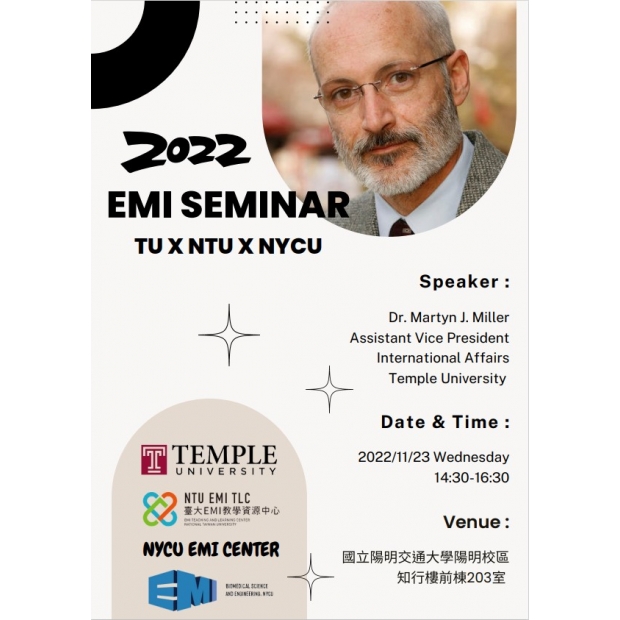
 TU X NTU X NYCU EMI SEMINAR
TU X NTU X NYCU EMI SEMINAR
TM x NTU x NYCU EMI SEMINAR
歡迎天普大學副校長MARTYN JOHN MILLER、台大雙語教育中心與台大EMI教學資源中心來訪陽明交通大學,進行EMI學術研討會
Time:
Nov 23, 2022(Wed.) 14:30-17:30
Venue:
Zhi Xing Building (front) room 203
Sharing:
Temple experience
Why bilingual education?
Divergent thinking, memory, reasoning, and problem-solving abilities
Awareness and appreciation of different cultures
Flexibility, adaptability, and openness in attitude
Globalization: language learning is central to politics, economics, history, and education
Concerns
Can we really trust current English proficiency tests (TOEFL, CEFR, IELTS, etc.)?
They could be biased.
Students with high test scores can’t really deliver their professional knowledge in English.
Is money the best motivation?
It won’t be sustainable.
International personnel costs more than local personnel
Does the government have a commitment to them?
Is CEFR B2 level enough for students to take EMI courses?
B2 is only daily conversation; C1 is more suitable for most academic studies, because C1 students
Speak English fluently and spontaneously
Do not see English as intimidating
Why don’t we start preparing students for B2 level at high school, and help them reach C1 level in the first year of university?
Temple’s strategies
For faculty development
Improve faculty on English proficiency and pedagogy: extended pedagogy workshops
1 to 2 days, for more than 2 hours/each, conducted in English
Not just teach English, but also pedagogy
Peer teaching with foreign faculty member
Classroom observation through objective, non-threatening methods
When an outsider walks in the classroom, it really scares both the students and the teacher.
Provide resources on teaching international students
Making teaching award winners mentors
For students’ language proficiency
2 day intensive orientation
Student leadership: encourage students to lead something
International Student Advisory Board
Temple Student Government
Student Worker Positions
International students’ working opportunity
Student Success Center
(Low stress/ must speak English)
Language Tutor
Writing and Research Retreats
Academic coaching
Conversation hours
International coffee hours (the problems they’re facing in their countries right now)
Open discussion
Question: Although at least 60% of students in NYCU reach CEFR B1 level, students’ English proficiency is still one big challenge in EMI courses. Any good strategy for this?
In their freshman year, spend more time/ put more English language courses in the curriculum to enhance their English proficiency.
Peer teaching: students learn more from their classmates
What Temple did: intensive 4-week language training before the semester begins for those with lower English proficiency
It’s conditional.
Statistics have shown that it’s enough to help them go through EMI courses
Ideally no more than 15 students/per class; maximum 18 students; with 1 instructor
Question: How can we find an EMI teacher’s true passion or motivation?
Select high motivated EMI teachers
Question: How do we encourage students? How can we use all these resources to maximize the impact?
Many medical students think that they’ll eventually be serving local people, so they don’t care about being bilingual or not.
They’ll need to speak not only Mandarin, but also dialects, Hakka, etc. There stands the importance of picking up another language.
To maximize the impact of all the resources, think about collaboration.
Lots of students from NYCU Hsinchu campus (most with engineering background) want to work abroad/in an international company, which serves as a good incentive
Students care about their professional development outcomes, so tell them how much money they can make by adding a language
Suggestion: immerse students more in the bilingual environment
Open EMI classes consistently (every semester)
Use english to study
Question: In Taiwan, the students are not ready to become bilingual yet, but the government is pushing. Has Dr. Miller observed any similar situation in other universities?
Dr. Miller: I don’t really have this kind of experience. But, Canada is the model. It’s been only 20~30 years for them to come this far, becoming bilingual. We need to learn from them.
Different motivation
Canada (supporting environment)
Has a national definition of “bilingual”
Government employees need to pass French tests
Collected resources
Taiwan (top-down policy)
Money from government is not stable/ sustainable
“You can give me lots of money but you can’t buy Chinese out of me.”
Do people really need English in Taiwan?
Suggestion: The nation needs to embrace this policy as a whole, and to accept English as a second language. Until then, promoting EMI courses won’t be easy.
Suggestion: to create EMI teaching awards
For teachers who really generate impact to the society
Sharing: challenges in NTU
Although student’s English proficiencies are better, NTU still works on improving it
全英培力課程: teach about the foundation of language
Activities to create bilingual environment: English corners, workshops, etc
3MT competition
Authorized by University of Queensland
Participants are coached 1 by 1
The winner goes to Australia for further competition
These activities are actually quite popular: about 4,000 students participated
NTU doesn’t intend to separate students from faculties. These activities are for both the students and the faculty
Real challenge: finding those students who have the potential/ they don't have the opportunity to show their potential
Question: Speaking of motivated/ not-motivated/ likely to be motivated students, what kind of students should we focus on in the long run?
Ans: students who are likely to be motivated
We aim for the potential, see it as an investment.
Suggestion: when the problem goes back to the policy maker
The KPI of current policy is not realistic. 10 years is not enough to achieve it.
Communicate or negotiate with the government side/ speak up to MOE
Education is an economic engine. Show them how the BEST program will bring in money.
The USA has realized that education is a business. Economic impact indicators are made to prove that point. It took almost 20 years for the USA to bring industry in, then the money will speak up. (Reference: 2022 Economic Report of the United States) -
Read More
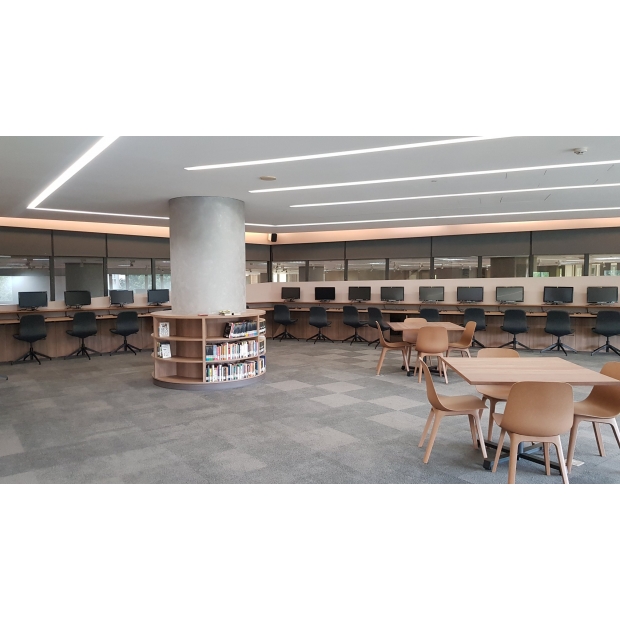
 大學雙語教師專業發展中心 Center for Higher Education EMI Professional Development
大學雙語教師專業發展中心 Center for Higher Education EMI Professional Development
參訪大學雙語教師專業發展中心
Center for Higher Education EMI Professional Development -
Read More
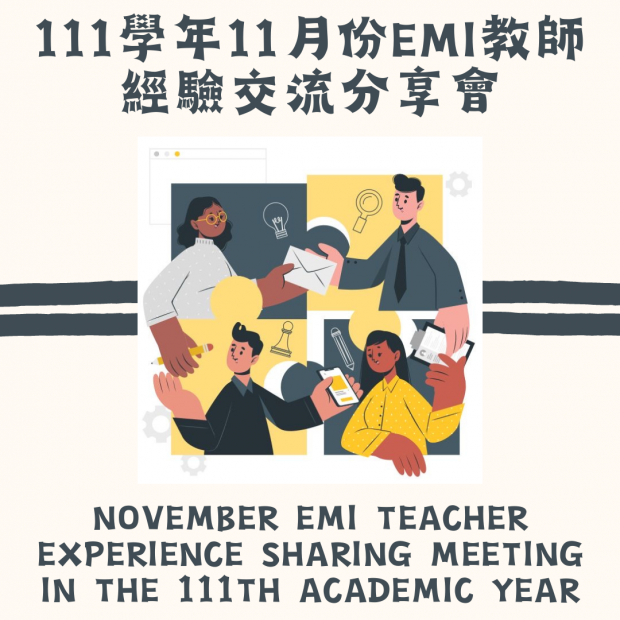
 [2022.11.10] 111學年11月份EMI教師經驗交流會 November EMI Teacher Experience Sharing Meeting in the 111th Academic Year
[2022.11.10] 111學年11月份EMI教師經驗交流會 November EMI Teacher Experience Sharing Meeting in the 111th Academic Year
111學年11月份EMI教師經驗交流分享會
分享教師:醫學生物技術暨檢驗學系 張懿欣老師
時間:2022年11月10日 12:10-13:10
地點:知行樓前棟 203教室
與會者:陳喬男老師、張景智老師、莊惠燕老師、盧家鋒老師、嚴偉哲老師、高瑀絜老師、蔡明翰老師、薛特老師、葉祖秀、陳奕潔
經驗分享內容:
英語授課
初衷/動機與轉變
從歐洲的Summer school開始,2學分/36個小時,來自18個不同國家的學生,開啟了英語授課之旅。2011年在陽明大學的國際衛生學程中,受邀開始在學程中擔任課程的老師,更是讓我有了不同的教育眼光。
英語授課的想法
11年下來,對於英語授課其實每年的經驗都不盡相同,到了2022年,從這學期開始教授了EMI課程,其實會發現,EMI授課與英語授課真的完全不同,因為面對到的學生特質,真的完全不同
外籍vs台灣學生
心理準備
外籍的學生有幾個特質,學習動機強、主動性/互動性強,雖然在國際學程當中,英語能力差異不大,但腔調的差異,有時候在溝通上還是會發生讓人印象深刻的事情。最後是專業背景的歧異,在這方面,可以透過了解學生背景、日常生活的對話聊天,據以決定課程設計與內容,讓知識可以更加深入在學生腦海中。
台灣的學生不像外籍學生一樣,學習動機普遍較低,更不用提互動性,如何讓台灣學生提高這些動機,我想這是老師們在設計課程上需要更加費心之處。
授課心得與建議
對於專業背景的歧異,了解並尊重學生背景,透過跟學生的聊天,調整上課的形式,加入一些online teaching tool。
EMI以單次課程為單位,建議在授課第一堂說明授課大綱,在課程中對於專有名詞的定義的解釋,可以由中文來輔助。
增加Q&A的時間,最後,將整堂課做結語,讓學生可以有更多的印象。
結語
在政策面/執行面上,必修/證照專業科目要翻轉成EMI授課還是有許多壓力,因為是證照考試的系所,因此系上是從選修開始翻轉。對於學生,會希望以鼓勵性取代強制性,讓學生有夠多學習動機,進而增加學習表現。對於教師端,會建議鼓勵的配套措施(如教師評鑑)。最終回到教育本質上,百年樹人/素質養成really takes times!
November EMI Teacher Experience Sharing Workshop of the 111th Academic Year
Speaker: Teacher Zhang Yixin from the Department of Biomedical Engineering and Biotechnology
Date: November 10, 2022
Time: 12:10-13:10
Location: Room 203, Front Building of Zhixing Building
Participants: Teacher Chen Qiaonan, Teacher Zhang Jingzhi, Teacher Zhuang Huiyan, Teacher Lu Jiafeng, Teacher Yan Weizhe, Teacher Gao Yujie, Teacher Cai Minghan, Teacher Xue Te, Ye Zuxiu, Chen Yijie
Experience sharing content:
English Teaching
Original Intention/Motivation and Changes
Starting from the European Summer School, with 2 credits/36 hours, and students from 18 different countries, it opened the journey of English teaching. In 2011, I was invited to teach courses in the International Health Program at Yang Ming University, which gave me a different perspective on education.
Ideas about English Teaching
Over the past 11 years, the experience of English teaching has been different every year. In 2022, starting from this semester, teaching EMI courses, I discovered that EMI teaching is really different from English teaching because of the characteristics of the students we face, which are completely different.
Foreign vs Taiwanese Students
Mental Preparation
Foreign students have several characteristics: strong motivation to learn, strong initiative/interactivity. Although there is not much difference in English proficiency in international programs, differences in accents sometimes lead to memorable incidents in communication. Finally, there is the diversity in professional backgrounds. In this aspect, by understanding students' backgrounds and having conversations about their daily lives, we can determine course design and content to deepen knowledge in students' minds.
Taiwanese students are not like foreign students. Their motivation to learn is generally lower, not to mention interactivity. How to motivate Taiwanese students to improve in these areas is something that teachers need to put more effort into in course design.
Teaching Experience and Suggestions
Regarding the diversity in professional backgrounds, it is important to understand and respect students' backgrounds and adjust the format of classes through conversations with students, incorporating online teaching tools.
For EMI courses, which are taught on a per-session basis, it is recommended to explain the course outline in the first class and provide definitions of specialized terms with the assistance of Chinese.
Increase the time for Q&A. Finally, conclude the entire class to leave a stronger impression on students.
Conclusion
In terms of policy/implementation, there is still a lot of pressure to transform compulsory/licensed professional subjects into EMI courses because it is a department related to licensing exams. Therefore, the transformation starts from elective courses. For students, it is hoped to replace compulsion with encouragement, providing them with sufficient motivation for learning and thereby improving learning performance. For teachers, it is recommended to have supportive measures such as teacher evaluations. Ultimately, it returns to the essence of education, "Educating students for a century/developing their qualities" really takes time!